




Tempering heating

Contents |
[edit] Introduction
Tempering heating is a form of convection heating that is installed either into - or adjacent to - walls to moderate the temperature and moisture levels inside. This type of radiant heat distribution was introduced in 1982 by the Bavarian State conservation office.
As a form of climate control, tempering heating developed as a method for managing rising damp problems in museums where the moisture and its related consequences (such as mould, salt, bacteria and so on) could damage artwork and other vulnerable items in museum collections.
Tempered heating can also be an effective method for heating places of worship, fortresses and other historic buildings constructed from stone.
[edit] Radiant heating
A tempered heating system generates a steady flow of warm air that travels through a collection of looping tubes in the shell of the building. This approach reduces the capillary distribution of all forms of dampness while heating the room at the same time.
This type of radiant heating system warms surfaces that then in turn re-radiate heat and warm air adjacent to them by convection. This allows heat from a radiant source to distribute through a space. Because it is mainly directly heating through radiation, rather than heating the air (as in convective heating), it can be more efficient, particularly in large spaces, in spaces with poor insulation or in unenclosed or semi-enclosed spaces.
A tempered wall radiant heating system tends to be a low-temperature system spread over large surface areas. It heats certain walls continuously throughout the year, while others are only heated when colder temperatures are expected.
[edit] Benefits and drawbacks
Compared to other forms of heating, radiant heating (depending on the system used) can be:
- More healthy, separating heating from ventilation, and so reducing problems associated with dust, pollen and other pollutants.
- More durable.
- More comfortable, giving a more even temperature distribution.
- Space saving and unobtrusive.
- Quieter.
- Less expensive to run in certain situations. Low temperature systems in particular can run at a lower overall temperature than conventional heating systems whilst still achieving comfortable conditions.
- Easier to maintain.
- More directed.
Radiant heating also has less impact on air moisture content than other heating methods. However, depending on the system adopted:
- High temperature electric radiant heaters can be expensive to run.
- It can impose restrictions on floor and wall coverings.
- It can be expensive to instal.
- It can be less effective at cooling, and there can be condensation issues.
- There can be poor familiarity amongst designers and installers.
- It can be difficult to retrofit.
- It can be difficult to repair.
[edit] Related articles on Designing Buildings Wiki
- Air handling unit.
- Building services.
- Capillary action.
- Defects in stonework.
- Heating.
- Heat pump.
- Heat recovery.
- Heat stress.
- Heat transfer.
- HVAC.
- Radiant heating.
- Radiation.
- Retrofit and traditional approaches to comfort.
- Rising damp.
- Thermal comfort.
[edit] External references
IHBC NewsBlog
IHBC sponsors Gardens Trust event 23-4 Sept 2026
.jpeg)
'Learning from the Past, Shaping the Future’ takes place in Milton Keynes
Renovations to Frank Lloyd Wright's Fallingwater complete
.jpg)
World Heritage Preserved project opens house for tours again
Shakespeare Birthplace Trust places Hall's Croft on HAR Register
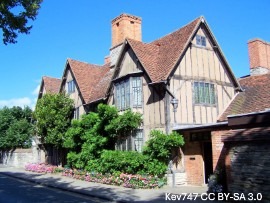
Stratford-upon-Avon home of Shakespeare's daughter is 'At Risk'
Lady Grange’s House repaired on St Kilda
.jpg)
National Trust for Scotland repairs stone cleit with link to famous island resident
Griff Rhys Jones on BBC Radio 4 Today programme
,_Green_Lane,_Derby.jpg)
The Victorian Society’s President unveiled its latest Top Ten Endangered Buildings 2026.
Need a MATE? Book your place now.

IHBC offers free webinars on applying for IHBC accreditation (Full & Associate).
UK Stained Glass Repository finds windows new homes
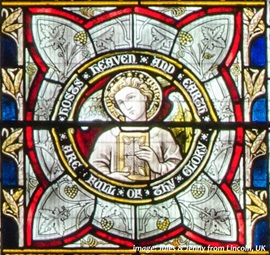
How are stained glass windows are rescued, stored and repurposed?
APPGEBE report sets high aims for quality

'Government must not sacrifice quality in drive to build 1.5m homes'
New measures protect Historic Shipwrecks from heritage crime

Underwater cultural heritage benefits from new HE guidance
How could the City of London skyline look in 6 years' time?

Visualisation shows approved planning applications as completed buildings
National Trust for Scotland calls for VAT cuts
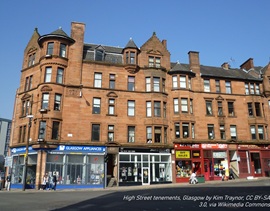
Heritage neglect is encouraged by current policies
IHBC's 'Context' Issue 186 features Industrial Heritage

IHBC's members' journal reports on the challenges of conserving infrastructure
Book now for IHBC Annual School 2026

IHBC Annual School is taking place 18-20 June 2026 in Newcastle
RICHeS Research Infrastructure offers ‘Full Access Fund Call’

RICHeS offers a ‘Help’ webinar on 11 March
Latest IHBC Issue of Context features Roofing
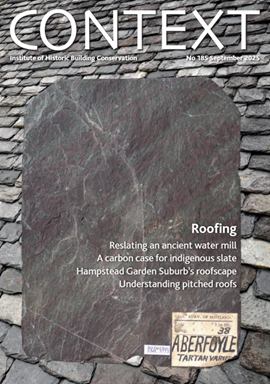
Articles range from slate to pitched roofs, and carbon impact to solar generation to roofscapes
Three reasons not to demolish Edinburgh’s Argyle House

Should 'Edinburgh's ugliest building' be saved?
IHBC’s 2025 Parliamentary Briefing...from Crafts in Crisis to Rubbish Retrofit

IHBC launches research-led ‘5 Commitments to Help Heritage Skills in Conservation’
How RDSAP 10.2 impacts EPC assessments in traditional buildings

Energy performance certificates (EPCs) tell us how energy efficient our buildings are, but the way these certificates are generated has changed.
Comments
Most tempered wall heating use hydronic emitters ie. hot water like floor heating but embedded in the wall.
Most of the distribution is by radiant heat 80% , convection currents 20% max. Its like when you are sking the air temp is 0C or less but the (directional) radiant heat of the sun keeps you warm.
Tempering wall heating system pdf
https://drive.google.com/file/d/0B9EBEHVfQ1BlUXEwYjVpRkRnUEk/view?usp=sharing